

Short Story: Its Better To Be Guilty
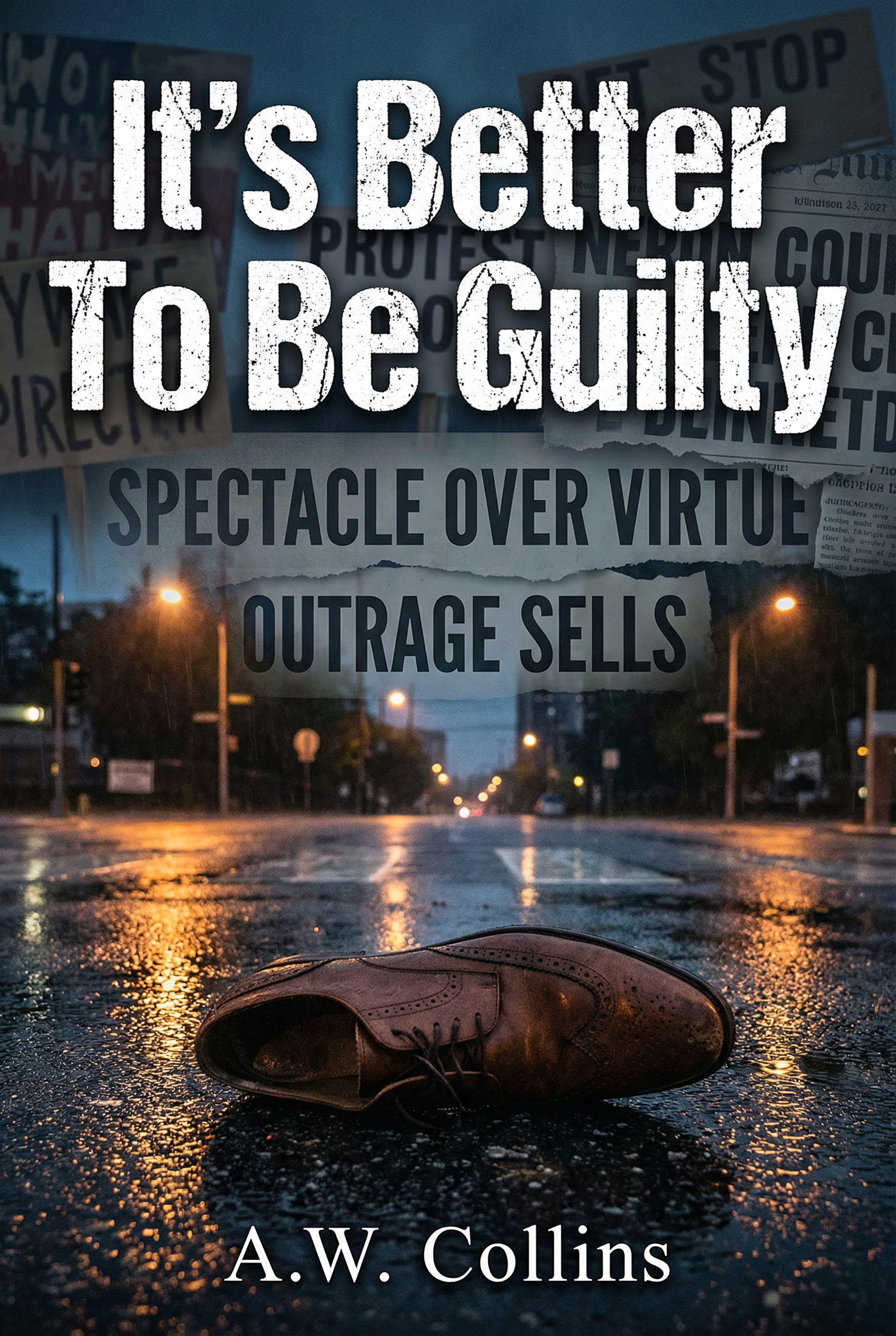
A man named Evan Hale died on a Tuesday, which felt appropriate. Tuesdays didn’t ask much of anyone, and Evan had always preferred days that made no demands on him.
He was crossing Maple Street with the light in his favor. The crosswalk signal had just finished blinking when a sedan drifted into the intersection. The driver’s eyes were lowered toward something glowing in her lap. There was no screech of brakes, or no heroic attempt to swerve. The car struck Evan with the inevitability of a mistake already made.
The driver was young. She cried immediately. She kept saying she didn’t see him, as though that was some kind of defense. Evan’s body lay crumpled and still with his shoe several feet away. The police were calm and almost too gentle with her. The report would later say visibility was limited, driver was distracted, no evidence of malice. It would conclude that the incident was tragic but unavoidable. By Thursday, his name appeared in the local paper, but It was spelled wrong.
Evan had lived as if the world were a place governed by invisible rules that, if followed, would reward him with safety and prosperity. He woke early daily, paid his bills on time, and he never raised his voice. He volunteered at the food pantry every Wednesday, stacking cans with their labels facing forward. He returned lost wallets intact. He left generous tips even when the service was mediocre because he believed effort deserved acknowledgment. He believed, without ever saying it, that goodness accumulated interest.
His apartment reflected this philosophy. It was clean, but not sterile. It was meager, but not lonely. The books on his shelf leaned toward history and science. He preferred explanations rather than escapes. He did not post much online. He did not promote outrage. When asked for his opinion, he always gave it carefully being certain to sand down the edges so it wouldn’t offend anyone. He had no enemies. He had very few exciting stories.
His mother, Margaret, learned of his death from a police officer whose voice seemed practiced in sympathy. She listened without interrupting, nodding as though being given directions rather than bad news. Afterwards, she stood at the kitchen sink and stared at the window over it. The glass needed cleaning; something Evan would have noticed.
Evan’s funeral was modest. People spoke in low voices, as though volume itself might be considered disrespectful. They said Evan was a good man. They said he was kind. They said the world needed more people like him. Then, they returned to their seats without explaining how such a world would or could be built. No one mentioned anger. No one demanded answers. Afterward, in a church pew, a cousin suggested starting a fundraiser. “People do that now,” he said, as though it were a fact of life. Margaret agreed. It seemed practical; necessary, even. She selected a photograph Evan had sent her months earlier. It was him at the food pantry, smiling politely, and holding a box of canned vegetables. She wrote the description herself:
Evan Hale was a kind young man who lost his life in a tragic accident. He volunteered weekly and never harmed anyone. We are grateful for any support during this difficult time.
She read it twice before posting it to check for any exaggeration. She found none.
The first day brought twelve dollars. The second day brought a single comment: Was the driver charged? When Margaret answered no, the replies stopped.
The page drifted down her news feed, becoming buried under much more negative and louder things. Stories with sharper edges. Videos that looped anger into momentum. Faces framed by protest signs. Main stream media narratives with villains, histories, and demands.
A woman in another state had died that same week. She had a criminal record. There was footage of the incident. There were arguments about what she had done and what had been done to her. The story spread like wildfire. Donations poured in to the tune of a million dollars. Statements were issued. People chose sides and felt useful doing so. Margaret watched it all unfold with a dull curiosity. She did not resent the woman or her family. She only noticed the contrast.
Evan’s death offered no conflict or no one to blame definitively. There was no system to indict. The driver said she was sorry. The law was satisfied. The story ended where it began, and there was nothing left for anyone to do. Margaret began to realize, goodness did not travel well.
Days passed. The fundraiser stalled at $183.
Margaret stopped checking it daily. At Evan’s apartment, she folded his clothes slowly, deciding what to keep and what to give away. She found a receipt in his pocket from a grocery store where he had paid extra to cover someone else’s shortage. She sat at the edge of his bed and laughed once at the idea that this small act, invisible and unrewarded, might have been the truest record of his life.
At night, she wondered what people needed in order to care. A villain? A spectacle? A cause that allowed them to feel righteous without feeling implicated? Evan had offered none of that. He had lived cleanly and died quietly, and the world, it turned out, did not know how to respond to that kind of loss.
On the thirtieth day, the fundraiser closed automatically. No one even noticed.
Months later, Margaret passed Maple Street on her way to the grocery store. The crosswalk had been repainted. A small sign warned drivers to watch for pedestrians. She sat there longer than necessary, watching the light change, thinking of how Evan would have waited even if the street were empty. A shopping cart sat abandoned nearby in the parking lot, slightly angled with potential to roll. She returned it. Not because anyone was watching. Not because it mattered. But because it’s what Evan would’ve done.
The moral of the story:
Today’s society does not reward virtue. It has learned to punish it with irrelevance. Law-abiding, careful, and kind people move through the world without friction, and because they create no resistance, they leave no mark. They offer no spectacle, no conflict, or no usable outrage. Their lives require no explanation, and so their deaths demand none. Crime, to the contrary, creates narrative. It supplies villains and victims in equal measure, invites arguments, draws lines, and generates outrage. A criminal life, once ended, can be rewritten as a symbol with its short-comings reframed as context, and its consequences reframed as injustice. The very disorder that once endangered others becomes the source of public meaning while virtue offers no such leverage. A man who obeys the law and treats others well asks nothing of the world but to be left alone. When he is gone, the world complies. This is the quiet bargain we have made. Those who disrupt us are remembered; those who do not are erased.
Not because goodness lacks value, but because it cannot be rearranged into anger. It cannot be rallied into slogans. It cannot be monetized into moral theater. And so, the lesson is not that crime is rewarded, but that obedience and decency are invisible currencies spent daily, honored privately, and redeemed nowhere. The most dangerous lie we tell ourselves is that goodness will be noticed. It won’t. It will only be missed by those who needed it most. And by then, it is far too late. Society does not reward virtue; it rewards spectacle. A father of four who lives decently, serves his community, and harms no one can die quietly and leave behind little more than private grief. His life produces no outrage, no argument, or no usable narrative. So, his loss is acknowledged but unsupported. A criminal, by contrast, creates conflict. In death, that conflict is reshaped into symbolism, outrage, and moral theater. Donations flow not because the crime is admired, but because the story is emotionally consumable. Goodness stabilizes the world but does not provoke it.
Crime disrupts it, and disruption draws attention. The uncomfortable truth is that attention has become our greatest reward coming in the form of clicks, likes, and shares. Those who generate it are rewarded; those who quietly sustain society are ignored. That inversion, where disorder is compensated and decency is invisible, is not compassion.
It is a reflection of what we now value as a society.
Have you read The Quiet Storm yet? I’d love to hear your thoughts. Leave a review on Amazon or send me a message through the contact page.