

Inspired By vs. Based On The Breakdown
Inspired By vs. Based On: Understanding the Difference in Storytelling
Writers often draw from reality. Memories, news events, personal experiences, and people we’ve known all find their way into fiction in one form or another. But there’s an important distinction between saying a story is inspired by something and saying it is based on something. While the phrases are often used interchangeably in casual conversation, they signal very different relationships between truth and imagination.
What “Inspired By” Really Means
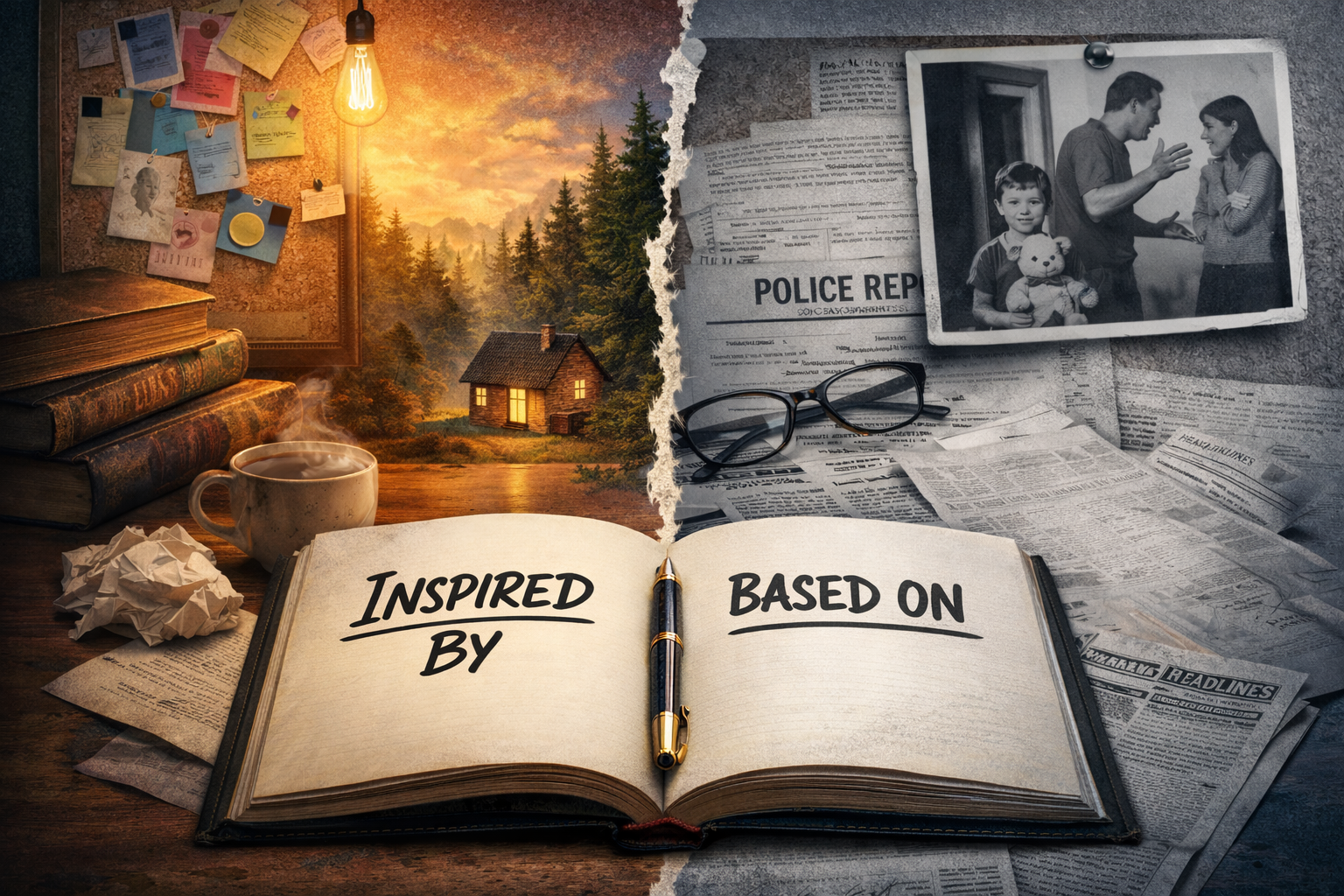
When a story is inspired by real events or experiences, reality serves as a spark; not a blueprint. The writer takes emotional truths, themes, or fragments of experience and reshapes them freely. Characters may be fictionalized composites. Events are rearranged, altered, or entirely invented. The narrative is driven by creative interpretation rather than factual obligation. Think of inspiration as raw material melted down and recast into something new. For many authors, this approach allows exploration of difficult or personal subjects while maintaining narrative flexibility and emotional distance.
What “Based On” Suggests
A work described as based on real events signals a closer tether to reality. While artistic license still exists, the core structure (major events, timeline, or central figures) reflects actual occurrences. Readers or viewers expect a recognizable connection to documented truth. Here, reality is not just the spark; it’s the framework. This approach often carries greater ethical responsibility. Representing real people or lived events invites scrutiny and requires care in balancing narrative and accuracy.
Why the Difference Matters
The distinction isn’t merely semantic; it shapes how audiences engage with a story.
• Expectation: Readers interpret the narrative differently depending on the label.
• Creative latitude: “Inspired by” grants freedom; “based on” invites accountability.
• Emotional framing: One prioritizes interpretation, the other representation.
For writers, choosing which phrase fits your work is also about honesty in intent. Are you transforming experience into fiction, or retelling reality through narratives?
Finding Your Place Between Them
Most storytelling exists somewhere along a spectrum rather than at either extreme. Personal history might shape a character’s emotional arc while plot events remain fictional. Real incidents may anchor a narrative that otherwise explores imagined motivations or outcomes. The important question is not which label sounds stronger; it’s which one reflects the relationship between your story and its source. Because ultimately, storytelling isn’t about distancing ourselves from truth or replicating it perfectly. It’s about deciding how truth will serve the story you need to tell.
Sincerely,
A.W. Collins
If you’re struggling with the emotional weight of your source material, check out my previous post on My Writing Journey: The Quiet Storm