

The 7 Ways Indie Authors “Change” the Amazon Algorithm
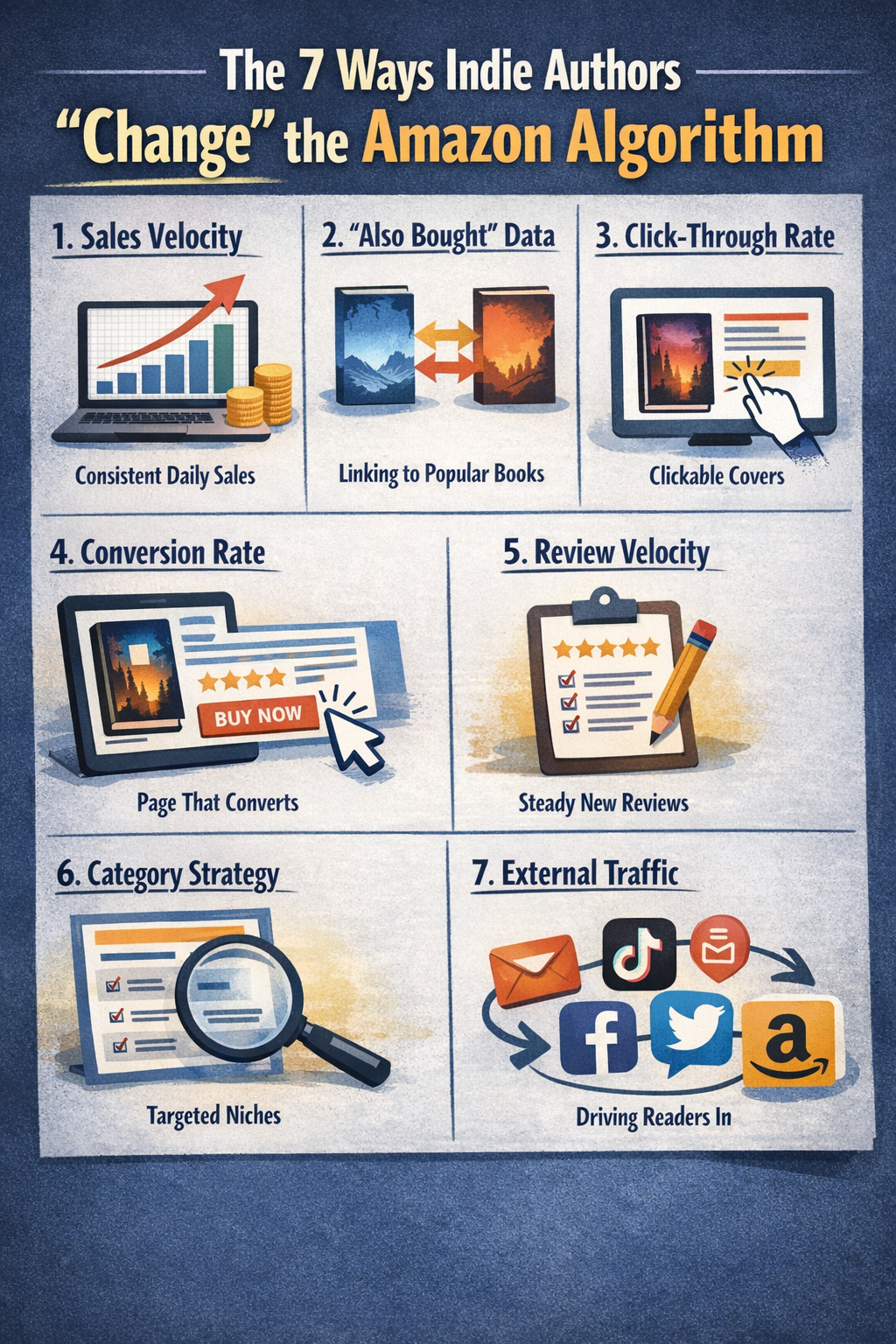
1. Sales Velocity (The #1 Factor)
Amazon prioritizes how fast your book sells, not just how many copies. A book selling steadily every day ranks higher than one with a huge spike and then nothing.
Goal: create consistent daily sales.
How authors trigger it:
Launch teams
Email lists
Ads running continuously
Multiple small promotions instead of one big blast
Example:
10 sales/day for 30 days = strong algorithm signal
200 sales in one day then zero = weak signal
Consistency wins.
2. “Also Bought” Data
Amazon links books together when readers buy them in the same purchase pattern.
If readers who buy your book also buy:
Stephen King
Gillian Flynn
Karin Slaughter
Amazon begins recommending your book on those pages.
How to influence this:
ARC readers who read in your genre
Newsletter swaps with authors in your niche
Cross-promotion with similar books
Bad early buyers (friends who only buy one book a year) can damage the algorithm data.
3. Click-Through Rate (CTR)
When Amazon shows your book: Do people click?
If yes → Amazon shows it more.
If no → Amazon buries it.
CTR depends on:
Cover
Title
Star rating
Price
This is why covers sell books on Amazon.
4. Conversion Rate
After someone clicks your page: Do they buy?
Amazon tracks this closely.
A strong page has:
Hook in first line of description
Reviews
Good look inside sample
Strong categories
Amazon literally measures the “unit session percentage” (conversion rate) to determine visibility.
5. Review Velocity
Reviews matter—but recent reviews matter more.
Amazon tracks:
how fast reviews arrive
whether they are verified purchases
review sentiment
A book getting 2 reviews every week outranks one with 200 old reviews.
6. Category Strategy
Many indie authors sabotage themselves by choosing giant categories.
Example:
Bad: Mystery & Thriller
Better: Psychological Thriller, Kidnapping Thrillers, Domestic Suspense
Smaller niche categories make it easier to rank and gain visibility.
7. External Traffic
Amazon rewards books that bring readers from outside Amazon.
Examples:
TikTok
Facebook
email lists
podcasts
blogs
If Amazon sees outside demand, it assumes the book is popular and boosts visibility.
What Actually Changes the Algorithm the Most
If you want the single most powerful move, it’s this:
Controlled Sales Bursts
A pattern like this:
Day 1 – 25 sales
Day 2 – 20 sales
Day 3 – 18 sales
Day 4 – 15 sales
This tells Amazon: “Readers are actively discovering this book.”
Then Amazon pushes it into:
“Customers also bought”
category charts
recommendation emails
What Successful Indie Authors Do (The Real Strategy)
They create stacked signals:
ARC team reviews
Launch promotion
Ads running daily
Email list sales
Newsletter swaps
KU reads
Social media traffic
This creates a self-feeding algorithm loop: Sales → visibility → more sales → more visibility.
The Harsh Truth Most Authors Learn Late
Amazon rarely pushes one book forever.
The algorithm loves new releases.
Many successful indies grow by:
releasing 2–4 books per year
linking them together
building read-through in a series.
Each new book revives the entire catalog.
***BASED ON INTERNET RESEARCH